
 Amelia Price
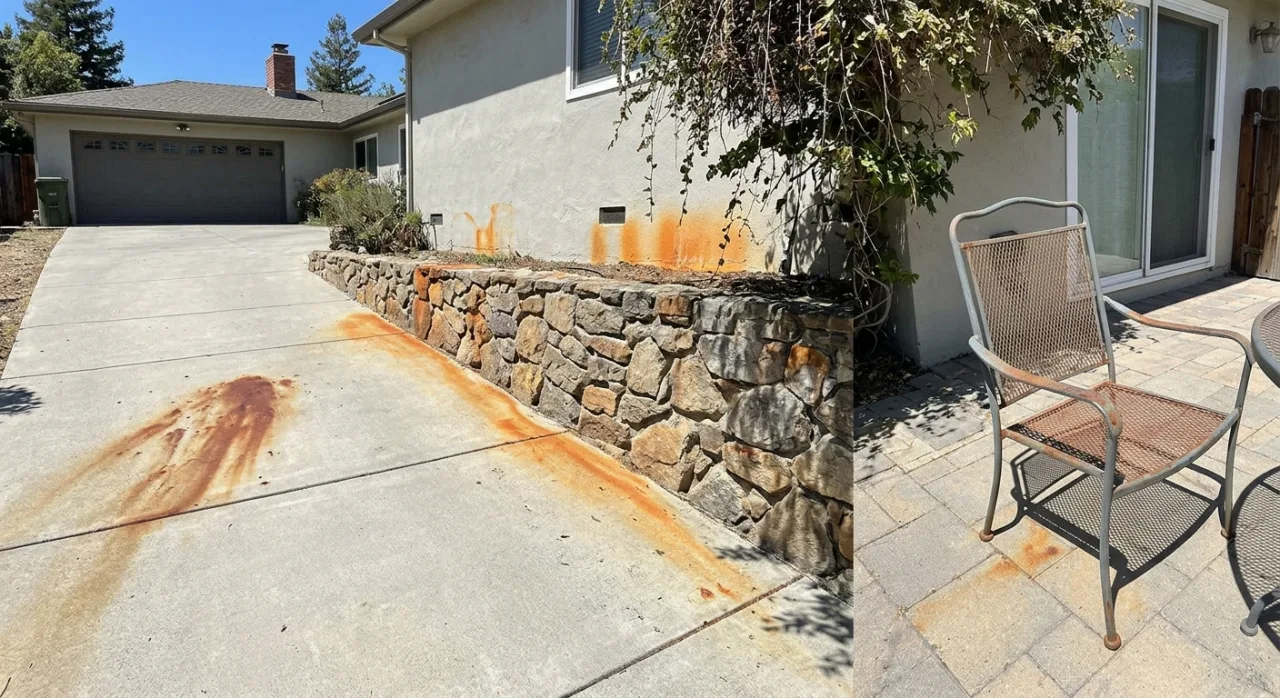 Understanding how rust affects properties and outdoor surfaces is essential for every homeowner. Orange and reddish-brown marks on driveways, walls, patios, and walkways quickly make clean surroundings appear neglected. These stubborn stains develop when free iron particles interact with moisture and oxygen, creating an oxidation process that spreads across nearby stone, concrete, and painted surfaces. Properties relying on well water or older metal irrigation equipment often experience persistent staining. By understanding how rust develops and addressing its root causes, property owners can maintain cleaner surfaces and significantly reduce avoidable repair expenses.
Why Prevention Beats Repeated Cleaning
Removing visible stains improves a property’s immediate curb appeal, but preventing recurring contamination is far more cost-efficient over the long run.
-
Identify Hidden Iron Sources: Metal fixtures, outdoor irrigation systems, garden tools, and patio furniture frequently release iron particles when exposed to humidity, rain, or general corrosion.
-
Routine Inspections: Regular physical inspections, appropriate protective cleaning, and timely hardware repairs greatly reduce exposure to rust-producing materials.
-
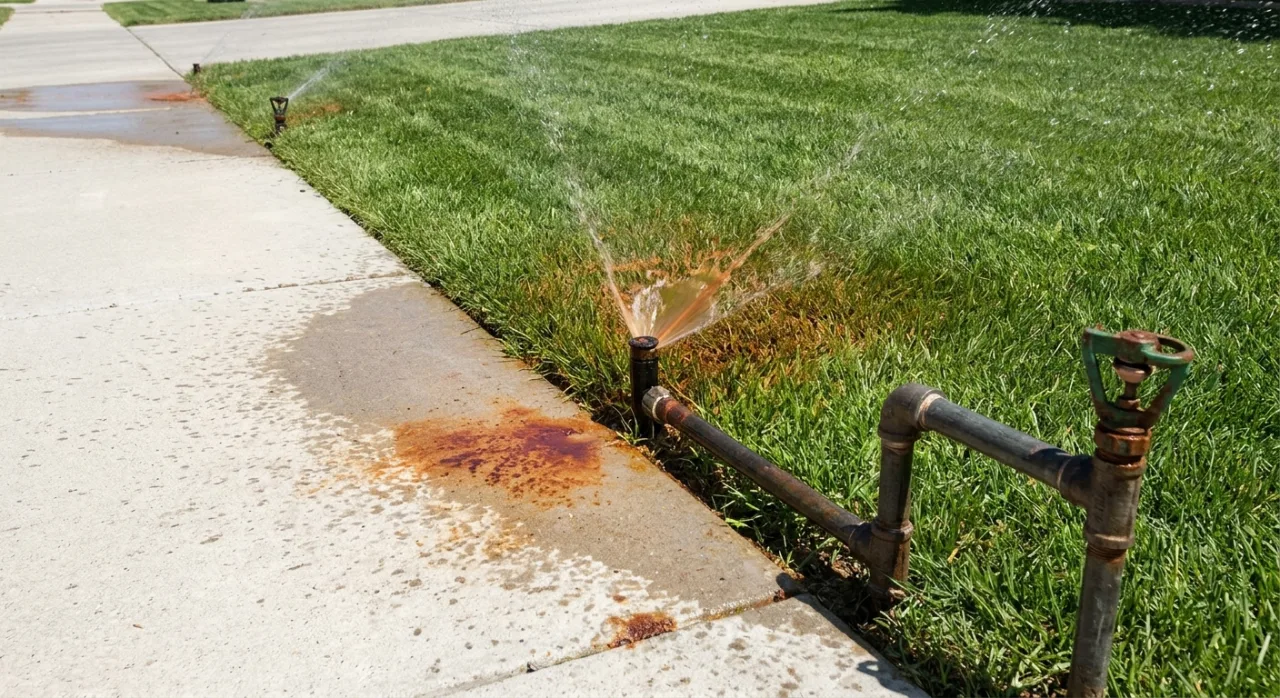
Inspect the Water Supply: When an irrigation system repeatedly leaves orange marks across sidewalks and turf, test the local water supply for high iron levels.
Addressing the root cause instead of relying exclusively on surface cleaning provides consistent results and simplifies long-term property upkeep.
Common Sources of Rust Stains
Accurate identification of rust sources is vital before selecting any cleaning method:
| Source | How Staining Occurs | Common Stained Areas |
| Well Water | High levels of dissolved iron settle after repeated watering cycles. | Lawns, foundation walls, sidewalks, driveways. |
| Metal Fixtures | Rain and humidity corrode railings, tools, furniture legs, and pipe fittings. | Patios, decks, concrete pads, exterior walls. |
| Fertilizers | Fertilizer granules containing iron settle and dissolve on porous surfaces. | Concrete driveways, stone pavers, walkways. |
Observing where marks appear and tracking when they return helps pinpoint the exact cause, allowing you to choose targeted preventive measures.
Effective Methods for Property Rust Stain Removal
Different building surfaces respond uniquely to chemical rust cleaners, so a single method rarely suits every property.
Effective rust stain removal begins with identifying the material and determining how deeply the stain has penetrated the porous substrate. Concrete may tolerate certain specialized acidic treatments that would otherwise severely damage painted wooden surfaces, natural stone, or delicate decorative finishes.
Important Safety & Application Tips:
Always select cleaning products strictly according to manufacturer instructions.
Always test an inconspicuous area first to check for potential surface damage or discoloration.
Avoid scrubbing surfaces with unsuitable metal wire brushes or mixing random cleaning chemicals together.
For extensive staining or delicate architectural materials, professional assessments help establish an appropriate approach while minimizing the risk of costly surface damage.
Protecting Concrete, Pavers, and Exterior Walls
Concrete driveways and paved walkways are particularly vulnerable to visible rust marks because their porous surfaces easily absorb iron deposits.
To limit the scope of the problem:
-
Rinse Promptly: Wash away mineral-laden water before it sets into the concrete.
-
Adjust Irrigation Streams: Redirect sprinkler heads away from paved areas and exterior walls to prevent continuous direct contact.
-
Use Surface-Specific Treatments: Select products tailored specifically to your wall or stone material so protective coatings and paints remain intact.
Combining smart preventive changes with surface-specific treatments preserves both the visual appeal and structural durability of outdoor materials.
Maintaining Irrigation Systems to Stop Recurring Marks
Irrigation equipment deserves regular attention when rust marks persistently appear across lawns, fences, or paved areas. Leaking pipe connections, corroded metal fittings, damaged sprinkler heads, and poorly directed water streams increase the amount of iron-rich moisture reaching vulnerable surfaces.
-
Scheduled Inspections: Routinely check connections and sprinkler coverage to catch leaks early.
-
Water Testing: Where well water contains significant iron concentrations, order a lab water test.
-
Filtration Systems: Based on lab results, installing a dedicated water filtration or iron-removal system can drastically reduce mineral deposits before water reaches your landscape.
Safe and Responsible Rust Treatment Practices
Some commercial cleaning products contain strong acids or active ingredients that irritate skin, damage delicate finishes, or harm nearby vegetation if handled incorrectly.
-
Personal Safety: Read product instructions thoroughly and wear recommended personal protective equipment (PPE).
-
Environmental Safety: Prevent chemical runoff into storm drains or plant beds.
-
Pressure Washing Caution: Use caution with high-pressure water washing. Excessive force can erode concrete joints, strip exterior paint, or damage softer building materials.
Building a Practical Long-Term Maintenance Plan
Creating a practical long-term maintenance plan makes rust problems much easier to manage over time:
-
Conduct Seasonal Audits: Inspect irrigation equipment, outdoor fixtures, paved areas, and water-treatment systems seasonally.
-
Track Recurring Locations: Record where stains appear and monitor whether preventive fixes are working over time.
-
Trim Overhanging Vegetation: Keep plants trimmed back from affected surfaces to improve natural air drying and sunlight exposure.
-
Schedule Professional Assessments: When staining remains persistent despite routine DIY care, arrange an expert evaluation to resolve deep-set issues.
Combining source control, appropriate cleaning techniques, and regular monitoring provides a practical strategy for preserving property appearance and reducing ongoing maintenance overhead.