
 Editorial Team
A lasting outdoor project begins long before plants go into the ground or stone reaches the job site. Experienced contractors study drainage, soil, sunlight, grading, traffic patterns, and maintenance demands before selecting materials. That planning prevents premature failures, protects the property, and keeps the finished space useful through changing seasons. Homeowners also gain clearer expectations about design, construction, care, and costs.
Several practical methods explain why experienced teams produce better long-term results.
1. They Start With Site Conditions
A property’s soil, slope, water movement, and sun exposure determine which improvements will perform well. Professional landscape contractors inspect these conditions before designing, identifying compacted soil, clay layers, standing water, erosion risks, and areas that receive limited sunlight. This assessment guides grading, drainage, plant selection, paving, and irrigation while reducing repairs caused by short-sighted choices.
Local conditions dictate success. For instance, regional properties often present difficult clay soils and sharp seasonal changes. Experienced contractors account for heavy rain, summer humidity, winter freezes, and heat stress by placing native or drought-resistant plants to match their environment, while installing robust drainage systems to direct water away from foundations, walkways, and planting beds.
2. They Connect Design With Construction
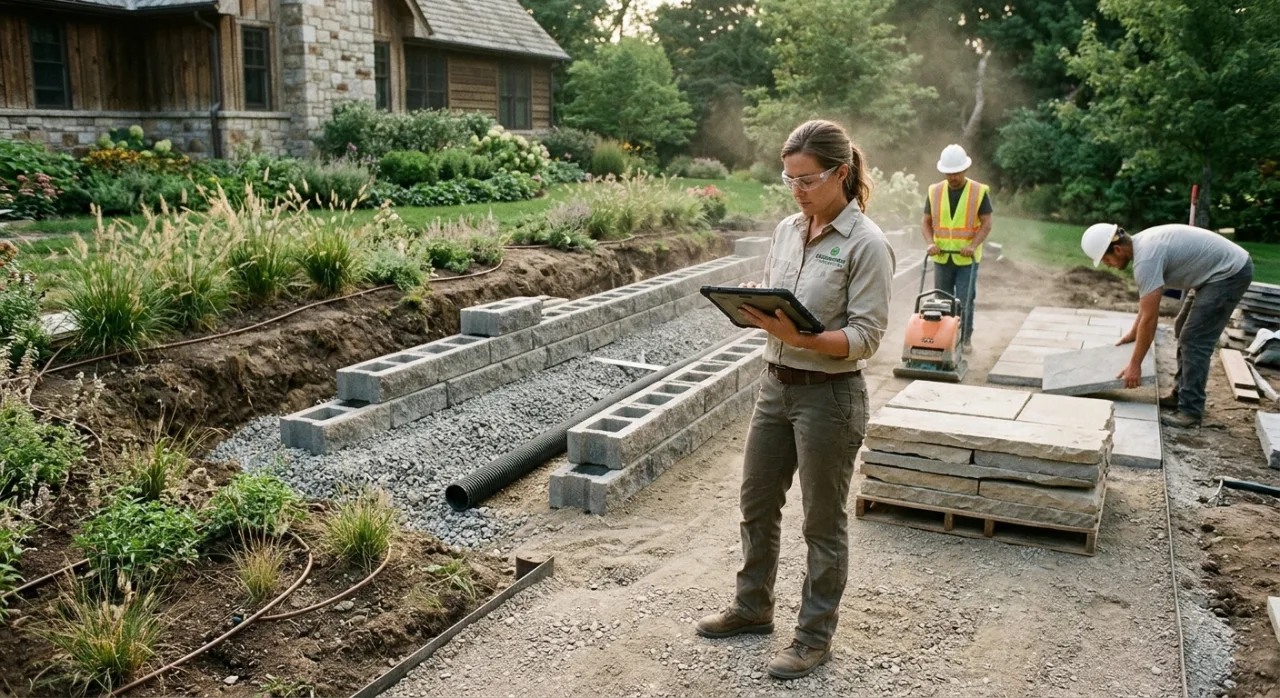
A clear plan gives every phase a measurable purpose. Detailed drawings show dimensions, elevations, plant locations, drainage paths, lighting positions, and material transitions. This information helps crews build accurately and gives homeowners a comprehensive review before construction begins.
| Design Element | Purpose & Function |
| 3D Renderings | Clarify how patios, walls, pools, and structures relate to the home’s architecture. |
| Grading & Drainage Paths | Map out exact water movement to prevent future pooling and structural damage. |
| Material Specifications | Define exact stone, wood, and plant types to prevent premature wear. |
Good design eliminates mid-project changes by addressing layout, access points, and visual balance early. However, construction quality ultimately depends on preparation beneath the visible surface. Crews must excavate to the right depth, compact the base properly, and install structural reinforcement. A patio that lacks a stable base will shift, settle, or develop uneven joints, while a retaining wall requires proper back-drainage, not just attractive face materials.
3. They Treat Drainage As Core Infrastructure
Water causes the majority of outdoor failures. Poor drainage washes out soil, weakens paving, damages plants, and sends runoff toward residential structures. Experienced contractors trace water movement across the property before choosing a solution, which may include grading, catch basins, channel drains, dry wells, or underground pipe networks tied to suitable discharge points. Adding surface mulch alone will never fix a recurring drainage problem.
Proper drainage is equally vital for plant health. While roots need moisture, saturated soil starves them of vital oxygen. Correct grading and soil preparation help planting beds drain at a controlled rate, significantly reducing stress during wet periods.
4. They Choose Materials For Actual Use
Material selection must match real-world functionality:
-
Driveways require heavy-duty bases and surfaces capable of withstanding vehicular loads.
-
Walkways require stable edges and precise slopes to carry water away safely.
-
Outdoor Kitchens demand heat-, moisture-, and spill-resistant surfaces that tolerate repeated cleaning.
Experienced contractors also account for thermal movement caused by temperature fluctuations. Proper joints, edge restraints, bedding layers, and installation methods keep hardscape materials stable. Plant selection follows the same logic: mature size, root behavior, water needs, and bloom periods matter far more than immediate visual appeal at a garden center.
5. They Build Maintenance Into The Plan
A project lasts longer when its care requirements fit the owner’s schedule. Professional contractors outline mowing needs, pruning cycles, irrigation checks, seasonal cleanups, and replacement expectations upfront.
Irrigation zones must match individual plant water needs and sun exposure. Separate zones keep lawns, shrubs, and drought-tolerant beds from receiving identical treatment, and controllers require regular seasonal adjustments. Early post-installation inspections catch settling, blocked drains, loose joints, and irrigation issues before they escalate, protecting the initial investment.
6. They Document the Finished Work
A dependable project handoff provides homeowners with useful long-term records. Comprehensive files should identify:
-
Material brands and plant varieties
-
Irrigation zone maps and controller locations
-
Underground drainage components and utility routes
Photographs documenting concealed utilities or drainage paths before soil and mulch cover them are invaluable. These details help future maintenance crews work safely, make accurate replacement decisions, and provide a practical reference whenever a fixture or plant needs adjustment.
Summary: Key Takeaways for Homeowners
Lasting outdoor improvements come from decisions made in a disciplined sequence: inspect the site, plan water movement, match materials to the job, and specify care before construction begins.
Homeowners can drastically improve project outcomes by requesting:
-
A thorough professional site assessment
-
A written, detailed scope of work
-
Explicit drainage and grading details
-
Clear material specifications
-
A structured seasonal maintenance plan