
 Leah Carter
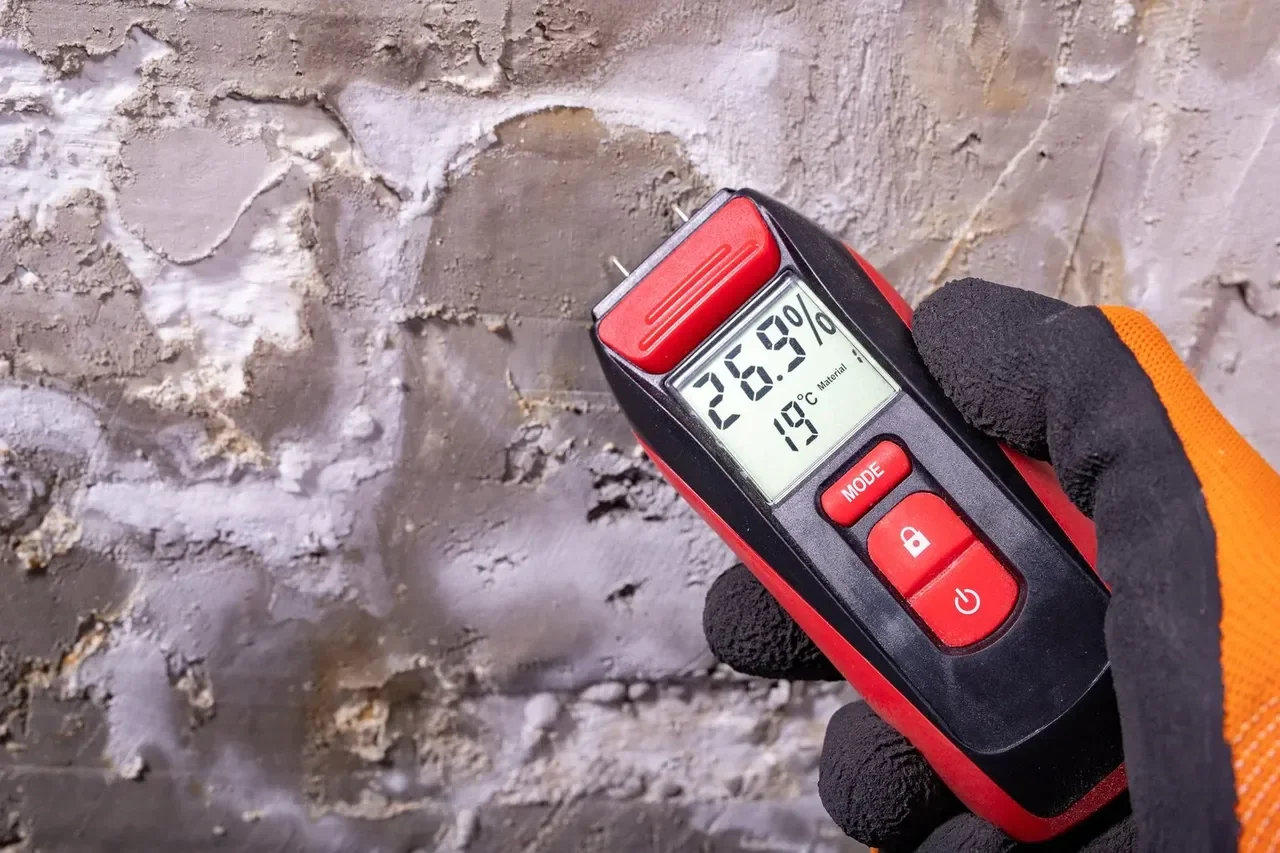
In South Florida, moisture testing decides whether a floor coating lasts. Groundwater and humidity push vapour up through concrete, and a dense epoxy film traps it, causing blisters and peeling weeks or months after a flawless install. Test first, then choose the coating system to suit the slab.
Most owners think first about colour, finish and downtime. The question that matters most sits underneath: what is the concrete doing? Answering that before any product is chosen saves money and disappointment.
Why South Florida Slabs Are Tricky
Much of Miami-Dade, Broward and Palm Beach sits on porous limestone with a shallow water table. Groundwater can be just a few feet below grade and rises after summer storms. Concrete is full of tiny capillaries that draw that moisture upward. Humidity adds pressure from above, so slabs in closed garages and unconditioned warehouses rarely dry fully. Older buildings poured without a vapour barrier are the biggest risk.
How Moisture Ruins a Coating
Epoxy forms a tough, low-permeability film, which is why it resists stains and chemicals. It also means rising vapour has nowhere to go. Pressure builds at the bond line, causing blisters, sometimes filled with liquid, and areas that sound hollow when tapped. Alkaline moisture can carry salts to the surface, leaving white residue and attacking adhesion.
Water problems rarely stay in one place. If a slab has a history of flooding or leaks, deal with that first; a guide to structural drying and flood recovery explains what proper drying involves.
The Two Standard Tests
ASTM F1869, the calcium chloride test, uses a sealed dish that absorbs vapour from the surface over a set period, giving the moisture vapour emission rate at the surface. ASTM F2170, the in-situ RH test, places sensors in drilled holes to read humidity inside the slab, which shows conditions within the concrete.
What to Do With High Readings
High results don’t always rule out a coating. They change the system. Options include moisture-mitigating primers and formulations designed for high vapour emissions. Urethane cement handles moisture differently from standard epoxy, and polished concrete avoids the issue by adding no film at all.
Preparation Matters Too
Even a dry slab needs the right texture. The International Concrete Repair Institute rates surface roughness on a concrete surface profile (CSP) scale, and coatings specify the profile they need, usually achieved by grinding or shot blasting. Prep also removes old sealers, paint, oil, curing compounds and weak surface laitance, and repairs cracks, spalls and joints.
Questions to Ask Contractors
- How do you test for moisture, and to which standard?
- Where will tests be placed, and how many?
- What will you do if readings are high?
- Which surface profile does the coating require?
Be cautious of any quote that skips moisture testing entirely. A contractor who answers all four questions without hesitation has usually done this before.